Autonomous AI Agents in 2026: The Biggest Shift in How We Work
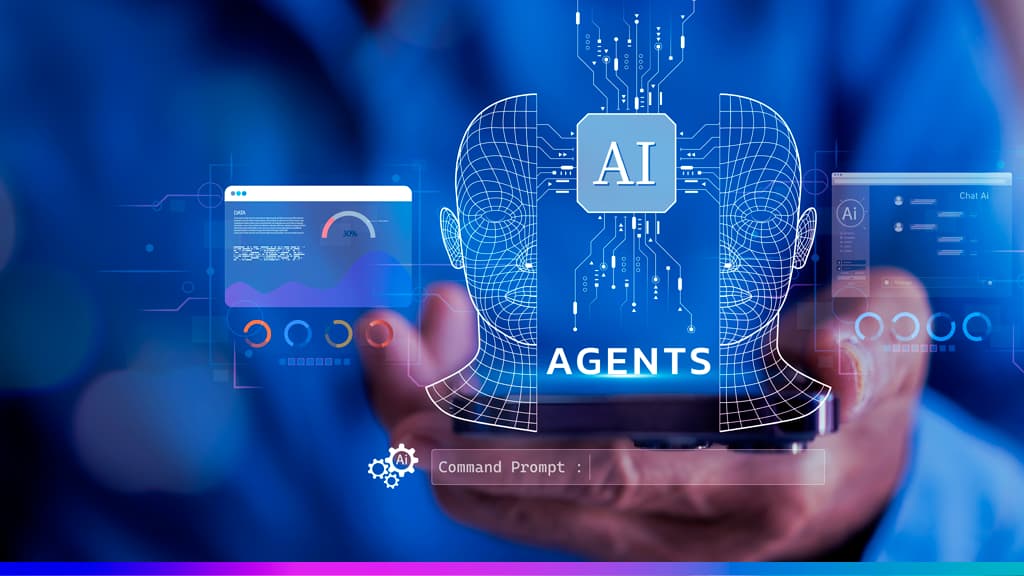
The biggest shift in AI for 2026 is not a new model — it is a new architecture. We are moving from AI as a tool you interact with to AI as an agent that works alongside you, managing tasks from start to finish without requiring constant instruction. This is the era of autonomous AI agents.
What Is an Autonomous AI Agent?
An AI agent is a system that can take a goal, break it into steps, use tools and external services, make decisions along the way, and complete the task — often without human intervention at each step. Unlike a chatbot that answers questions, an agent acts.
Give it a goal like “research the top five competitors in our market, compile their pricing, and draft a strategic analysis” — and it will do exactly that, navigating the web, synthesizing data, and producing a deliverable, while you focus on something else.
How Agents Work: The Core Architecture
Modern AI agents operate through a cycle of four processes:
- Perception: The agent receives a goal and gathers relevant context — from databases, the web, internal tools, or previous interactions.
- Planning: It breaks the goal into a sequence of sub-tasks and determines which tools to use for each step.
- Execution: It calls external tools — browsers, APIs, code interpreters, communication platforms — to complete each sub-task.
- Reflection: It evaluates the output, identifies errors or gaps, and iterates until the goal is met.
Where Agents Are Creating Real Value Today
💼 Sales and Business Development
AI agents can autonomously research prospects, qualify leads based on defined criteria, personalize outreach messages, track responses, and update CRM systems — running the top-of-funnel process at a scale no human team can match.
📊 Research and Analysis
Agents that monitor industry news, aggregate data from multiple sources, identify emerging trends, and produce weekly intelligence briefings — tasks that previously required a team of analysts working full time.
🛠️ Software Development
Coding agents like GitHub Copilot Workspace can take a feature request, write the code, run tests, identify failures, fix them, and submit a pull request — with human review happening at the end, not at every step.
📧 Executive Assistance
Agents connected to email, calendar, and communication tools can draft responses, schedule meetings, summarize long threads, flag action items, and manage follow-ups — functioning as a genuinely capable executive assistant available 24/7.
The Human-Agent Collaboration Model
The most effective deployments of AI agents are not fully autonomous — they are collaborative. Humans define goals, set constraints, review outputs at key checkpoints, and make final decisions. The agent handles the research, synthesis, drafting, and iteration. This division of labor produces results that neither could achieve alone at the same speed or quality.
The professionals thriving in this environment are those who have learned to think in terms of goals and outcomes — not tasks and steps. You tell the agent what you need, not how to do it.
What to Expect in the Next 12 Months
We are moving rapidly toward multi-agent systems — networks of specialized agents that collaborate on complex goals, each handling the part of the problem it is best suited for. A research agent, a writing agent, a data analysis agent, and a communication agent working together on a single business initiative.
The companies and individuals who build fluency with this paradigm now will have a structural advantage that compounds over time. The learning curve is real — but so is the leverage.