Physical AI: How Robots Are Learning to Navigate the Real World in 2026
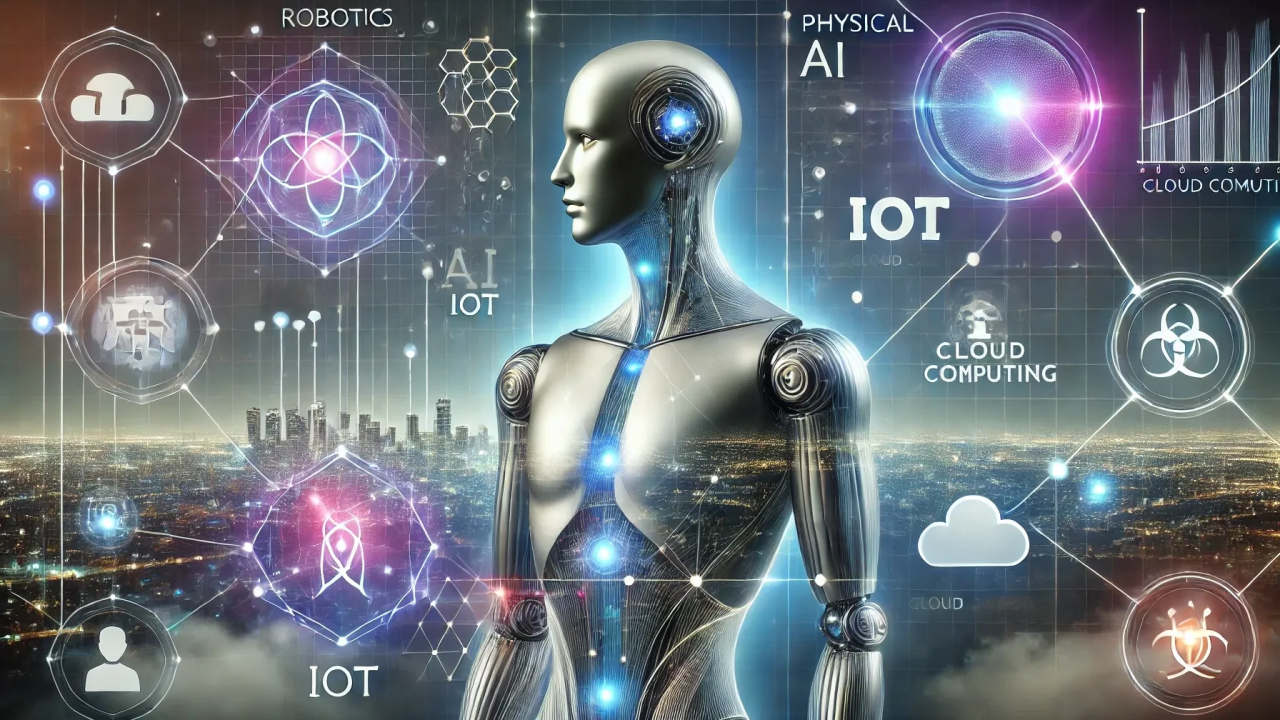
For most of its history, artificial intelligence lived in the cloud — processing text, generating images, answering questions. It operated in the abstract. In 2026, AI is getting a body. Physical AI — the integration of intelligence into robots and machines that operate in the real, physical world — is emerging as one of the most consequential technological shifts of the decade.
What Is Physical AI?
Physical AI refers to AI systems that perceive, reason, and act within unstructured physical environments. Unlike traditional automation, which follows rigid programmed rules, physical AI adapts in real time to conditions that were never explicitly anticipated. It sees, interprets, decides, and moves — just like a person would, but with superhuman speed and consistency.
The enabling technologies have converged simultaneously: more capable foundation models, cheaper sensors, faster edge computing, and advances in robotics hardware. The result is a new class of machines that can handle ambiguity — the thing that has historically made physical environments so difficult for robots to navigate.
Where Physical AI Is Being Deployed Today
📦 Smart Warehouses and Logistics
Amazon, Walmart, and global logistics companies are deploying AI-powered robots that do not follow fixed conveyor paths — they navigate dynamic warehouse floors, identify and pick irregular items, collaborate with human workers, and reroute autonomously when conditions change. These systems have reduced order fulfillment times by 40-60% in early deployments.
🌾 Agricultural Drones and Field Robots
AI-powered agricultural drones now fly autonomously over fields, identifying crop stress, disease, and water needs with precision that was previously impossible. Ground robots can selectively harvest fragile produce — a task that required human dexterity that machines have historically been unable to replicate. These systems are addressing labor shortages while dramatically improving yield and reducing pesticide use.
🏗️ Construction and Inspection
Physical AI is entering construction sites as inspection drones that identify structural defects, and as robotic systems that autonomously perform repetitive precision tasks like bricklaying and rebar tying. In infrastructure, AI-equipped drones inspect bridges, pipelines, and power lines — accessing dangerous locations without human risk.
🏥 Medical Robotics
Surgical robots enhanced with AI assistance are performing procedures with sub-millimeter precision. The AI does not replace the surgeon — it augments human capability, filtering hand tremors, providing real-time tissue analysis, and flagging potential errors before they occur.
The Key Breakthrough: Operating in Unstructured Environments
The critical advance in 2026 is not that robots are faster or stronger — it is that they can finally handle the messiness of the real world. A warehouse with a spilled box. A field with an unexpected weather event. A surgical scenario that deviates from the expected. Physical AI systems can adapt to these moments in ways that previous generations of automation simply could not.
This is powered by a new class of models trained on massive datasets of physical interactions — video of human hands manipulating objects, sensor data from previous robot deployments, simulation environments that generate billions of synthetic physical scenarios.
The Workforce Implication
Physical AI does not eliminate human work — but it fundamentally changes what humans are responsible for. The highest-value roles shift toward designing, supervising, and improving these systems. Workers who understand how to collaborate with physical AI — not compete with it — will have a significant advantage in the labor markets of the next decade.
The question for every professional is the same one it has always been: how quickly can you adapt to a new set of tools?